



October 27, 2026
October 27th, 1947, marks the day that invading indian military forces imposed indian rule upon the state of Jammu & Kashmir.
With over 700,000 troops now deployed there by the indian government, Kashmir is the most militarized place on earth and over the past thirty years has seen the killing of over 90,000 Kashmiri lives and the rape, torture, and enforced disappearnce of thousands more.
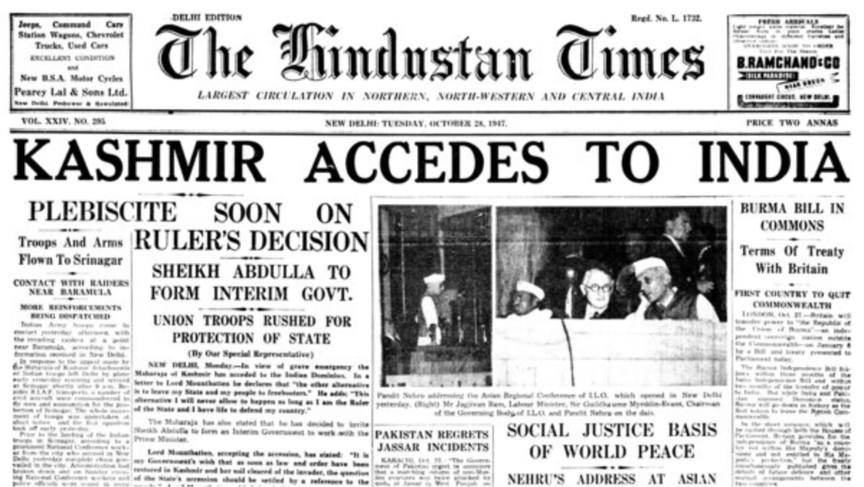
But for Kashmiris, Oct. 27 is more than just a day of sorrow. It is a time for us to renew and affirm our commitment to the pursuit of the Kashmiri right to self-determination.
It is a reminder that after decades of indian rule marked by brutality, exploitation, and oppression, we have survived and persevered.
That is why, on this Oct. 27, we asked Kashmiris to look towards hope and tell us about the first thing they plan to do in a liberated Kashmir.
Here are some of the responses we received:
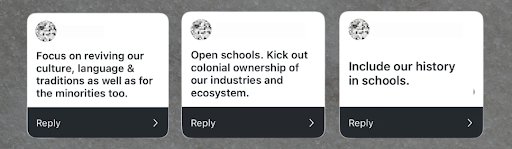
The indian occupation attempts to erase Kashmiri culture and identity.
- It has removed Kashmir from the curriculum: Many schools run by Falah-e-Aam Trust, set up by Jamat-e-Islami (JeI) were taken over by the indian state upon JeI’s ban. This is an attack on both Kashmiri and Muslim education.
Hundreds of RSS schools have also begun popping up in contrast. These instil “Desh Prem” (indian nationalism) in Kashmiri students, teaching Kashmiri children about being a “Hindustani” (indian), and lessons of “Bhartiyata” (indianness).
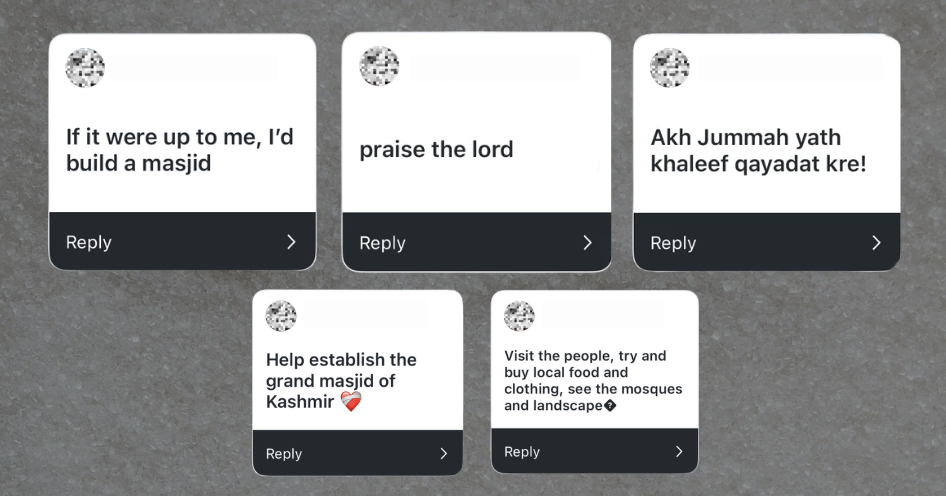
india has restricted religious freedom in Kashmir.
- Routinely banning Muharram processions in Kashmir: Kashmiris were not allowed to conduct their Muharram processions for 34 years until 2023. Even after the ban was lifted, indian armed forces routinely crack down on worshippers.
- Worshippers barred from Kashmir’s Grand Mosque, Jamia Masjid: Kashmiris have not been able to offer Eid prayers at Jamia Masjid for the past 8 years. The mosque continues to face routine closures for Friday prayers and holy nights such as Laylatul Qadr.
- Kashmir’s clerics and religious leaders have also been arrested or detained in large numbers.
- Appointment of the Waqf Board as a colonial tool: The indian government controlled Waqf Board, a body that supposedly ensures Islamic institutes are preserved, imposes further restictions on Kashmiri Muslims. A recent proposal suggested regulating Friday Sermon content across all mosques.
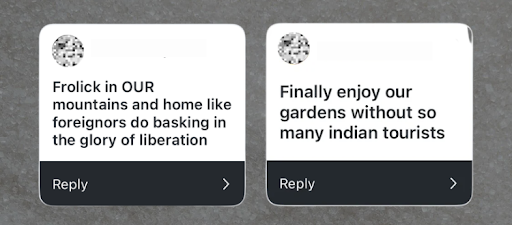
indian tourism displaces Kashmiris and destroys Kashmir.
- Tourism only contributes to 7% of the GDP but harms major Kashmiri industries and populations: Approximately 70% of Kashmiris are dependent on agriculture, horticulture, sericulture and arts and crafts. These industries are impacted when railways and highways are made to accomodate external tourism. Many indigenous Kashmiris are also displaced as a result of these projects.
- Kashmiris become second-class citizens to tourists in their own land: indian and foreign tourists are allowed to roam freely whereas Kashmiris are faced with barricades, surveillance and detention.
- Tourists contribute to Kashmir’s climate crisis: Religious tourists such as indian Yatris who come for the Amarnath Yatra are renowned for massive plastic and solid waste accumulation, severe water pollution from human/animal waste, contaminating rivers and causing deforestation, soil erosion, increased risk of landslides and flash floods.
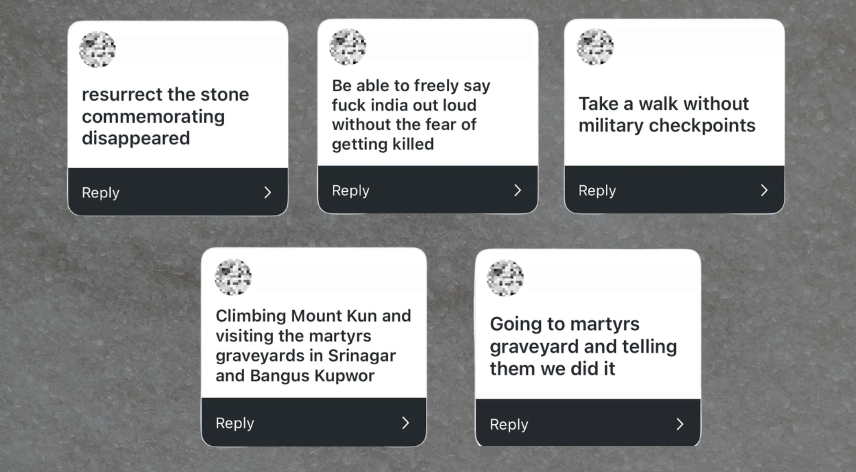
Kashmiris face constant intimidation, checkpoints, enforced disappearances, torture and death.
- india has subjected 8,000 to 10,000 Kashmiris to enforced disappearances in indian-occupied Kashmir.
- india carries out mass detentions against Kashmiris: india has arrested Kashmiris for journalism, on religious grounds, for human rights advocacy, for political involvement and for simply existing.
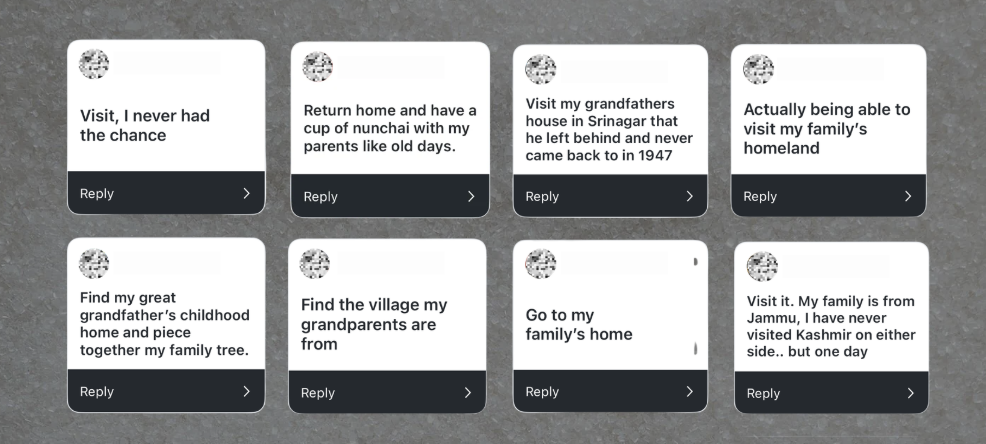
Many Kashmiris remain in political exile.
- india has launched a targeted campaign against anyone who speaks out against its occupation: Many Kashmiri activists and academics have been put on surveillance lists and are unable to return to Kashmir safely. india targets their families and loved ones and launches raids on their homes. The occupying regime also withholds No Objection Certificates (NOCs) to prevent Kashmiris from traveling.
india has launched a targeted campaign against anyone who speaks out against its occupation: Many Kashmiri activists and academics have been put on surveillance lists and are unable to return to Kashmir safely. india targets their families and loved ones and launches raids on their homes. The occupying regime also withholds No Objection Certificates (NOCs) to prevent Kashmiris from traveling.
Stay in touch with Stand with Kashmir.
Stand With Kashmir (SWK) is a Kashmiri-driven independent, transnational, grassroots movement committed to standing in solidarity with the people of indian-occupied Kashmir in ending the indian occupation of their homeland and supporting the right to self-determination of the pre-partition state of Jammu and Kashmir. We want to hear from you. If you have general inquiries, suggestions, or concerns, please email us at info@standwithkashmir.org.
Leave a Reply