



October 22, 2026
Recently, a proposal by the Jammu and Kashmir Waqf Board to introduce common Friday sermons across shrines and mosques has come under fire. The move has sparked widespread concerns among Kashmiris over the attacks on their religious autonomy, political interference, and the erosion of the Muslim community’s religious rights in the region.
The Waqf board claims to be “a statutory body entrusted with the administration, management and preservation of Waqf properties”- otherwise also recognized as long standing important Islamic institutions which have been inherited from the past, and which lend toward the social and economic development of Muslim communities.
According to the proposal the Waqf Board wants a “committee of Islamic scholars” to decide and pre-approve sermon topics for preachers at Waqf-affiliated mosques.
One scholar who attended the Waqf Board’s meeting told Al Jazeera that they were not told who would be part of the committee. This has raised serious concerns among critics about who gets to decide what is preached from Kashmir’s mosque pulpits.
Waqf Board chairperson and senior BJP leader Darakhshan Andrabi claimed that neither the government nor Board officials would decide sermon content and religious decisions would instead be made by imams and scholars associated with the board.
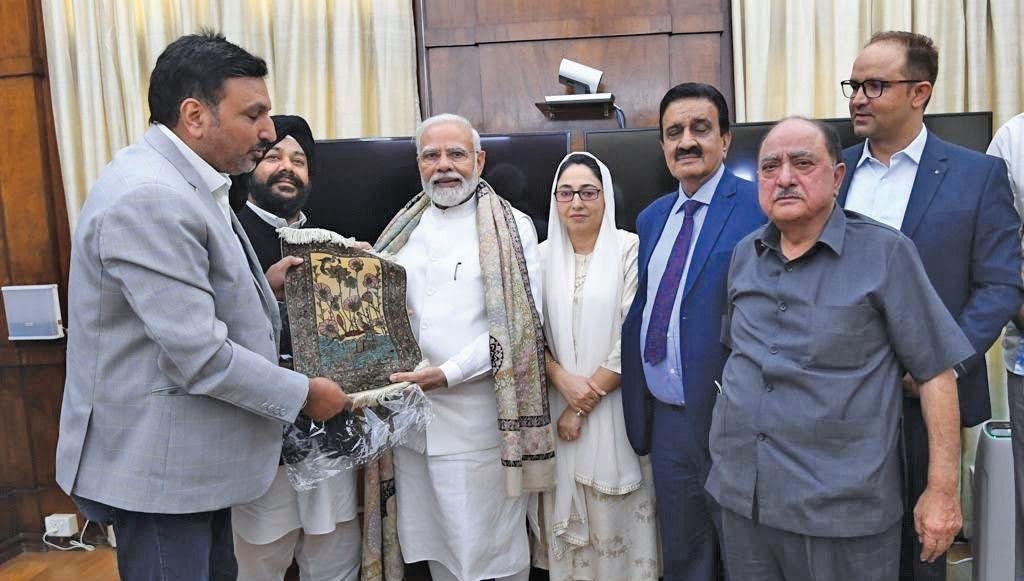
Photo: J&K Waqf Board
However, Andrabi’s claim and any notions of the Waqf Board being an independent body are dubious as Andrabi herself is associated with Prime Minister Narendra Modi’s BJP, and the Waqf Board operates within a system reshaped after the indian occupying regime revoked Jammu and Kashmir’s semi-autonomous status in 2019.
It is also important to note that Friday sermons are not limited to religious teachings in Kashmir. They provide a platform to discuss social problems, public grievances and issues concerning locals as well.
It is also important to note that Friday sermons are not limited to religious teachings in Kashmir. They provide a platform to discuss social problems, public grievances and issues concerning locals as well.
In Kashmir, religious autonomy cannot be separated from political control. Critics warn that allowing an administrative body to influence mosque sermons risks extending the occupation’s authority into religious life, further restricting Kashmiri Muslims’ ability to practice and interpret their faith independently.
This is not the first time india has regulated the content of religious sermons. A few years ago, Mirwaiz Umar Farooq, chief cleric of Kashmir, faced restrictions on his mobility, preventing him from giving Friday sermons on occasions when he is expected to speak on matters such as israel’s genocide in Gaza.
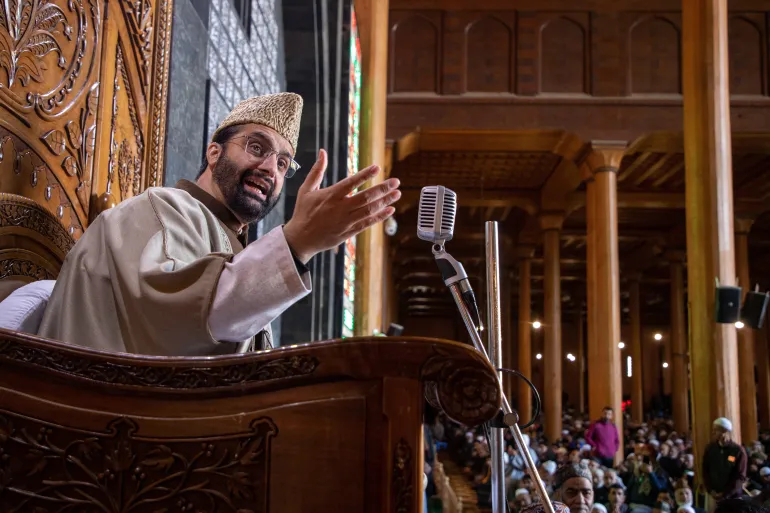
Photo: Getty Images
The indian occupation has repeatedly tried to exert control over local religious institutions.
- Mosques are profiled: In January, police sought extensive information on mosque leaders across Kashmir, including biometric data.
- Prayer has repeatedly been restricted: Srinagar’s historic Jamia Masjid has been closed for major occasions, including Eid and Laylat al-Qadr.
- Religious leaders see a broader pattern: While authorities cite security and public order, Kashmiri religious leaders describe these measures as a “systematic assault” on their religious identity, dignity and fundamental rights.
In the past, the Waqf Board has also sought to prohibit the practice of distributing yellow rice (Téher) inside the compound of the major shrines in the region, a centuries-old tradition tied to the Sufi missionary councils that promoted Islam in Kashmir.
In instances of colonialism, religion also becomes a tool for political mobilization. Restricting religious freedoms and speech is an attempt to curb action and resistance. Religion is a source of hope and collective solidarity- which is exactly what india seeks to kill in Kashmir.
Stay in touch with Stand with Kashmir.
Stand With Kashmir (SWK) is a Kashmiri-driven independent, transnational, grassroots movement committed to standing in solidarity with the people of indian-occupied Kashmir in ending the indian occupation of their homeland and supporting the right to self-determination of the pre-partition state of Jammu and Kashmir. We want to hear from you. If you have general inquiries, suggestions, or concerns, please email us at info@standwithkashmir.org.
Leave a Reply