




February 4, 2026
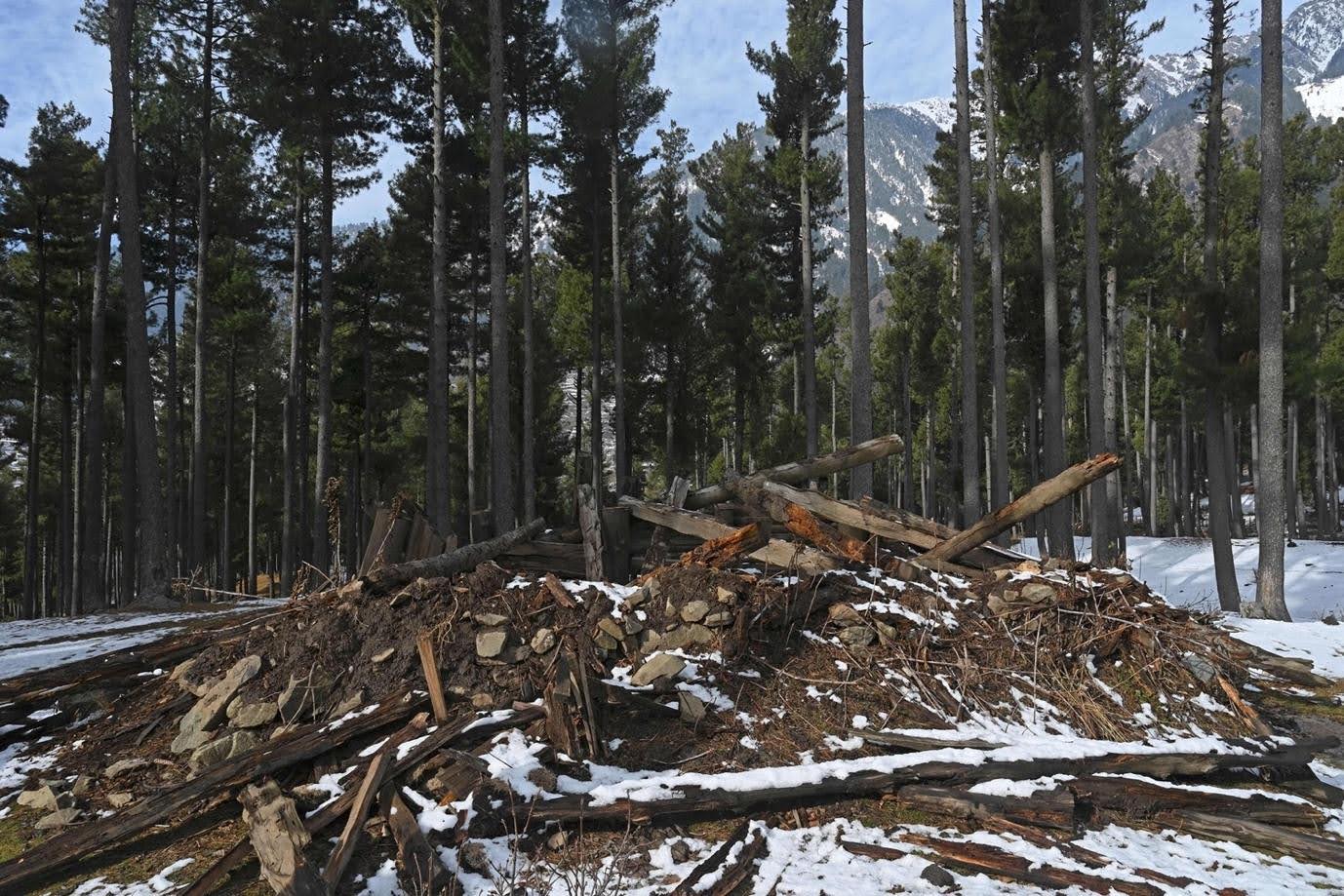
In March 2025, it was announced that as many as 47 highway projects spanning 810 km, costing Rs 41,735 crore ($ 4.5 million) were under construction at the time in the Kashmir region. This news came after a January 2025 report that Kashmir had lost forest cover equivalent to the size of Islamabad, Kashmir (Anantag City – 40.61 square kilometers) between 2023 and 2025.
Despite the indian occupying regime’s statements that development projects are meant to benefit Kashmiris, these projects have only resulted in Kashmir’s rapidly shrinking forest cover and ice caps, disrupted the livelihoods of Kashmiri farmers, traders and tribal communities, and disrupted Kashmir’s ecological balance.
And in spite of protests, india continues to relentlessly pursue ‘development’. The recently proposed 159-km NH-701A highway (Pir Ki Gali- Magam), will cut through the fragile Pir Panjal range, passing via Zaz Nar toward Sunset Peak. The project threatens the Sunset Peak Glacier, the source of Romshe Nala, along with alpine meadows and natural water systems.
The highway would require the felling of thousands of trees in a region already facing rising temperatures, shrinking snow cover, and climate stress. Construction, blasting, and increased traffic risk destabilising mountain slopes and disturbing wildlife habitats. The project will also disrupt Gujjar Bakarwal migratory routes and grazing lands.
Popular destinations like Gulmarg, Pahalgam, and Sonamarg have seen hotels and government buildings encroach upon forest land, often with official approval.
Other projects like the Jammu-Katra Expressway has taken up 36 hectares of forest land, while the construction of the new J&K High Court complex in Raika-Bahu- known as the “Lungs of Jammu”- will see 38,000 trees removed from 40 hectares.
Ecological and Social Impact
These ‘development’ have rapidly changed the ecological terrain of Kashmir. In the past year, the rising temperatures led to a nearly 40% shortfall in snow in J&K.
This past year also saw a surge in flash floods and landslides. In August to September 2025, relentless rains, flash floods and cloudbursts killed 110+ people, displaced families and caused losses worth hundreds of crores across J&K.
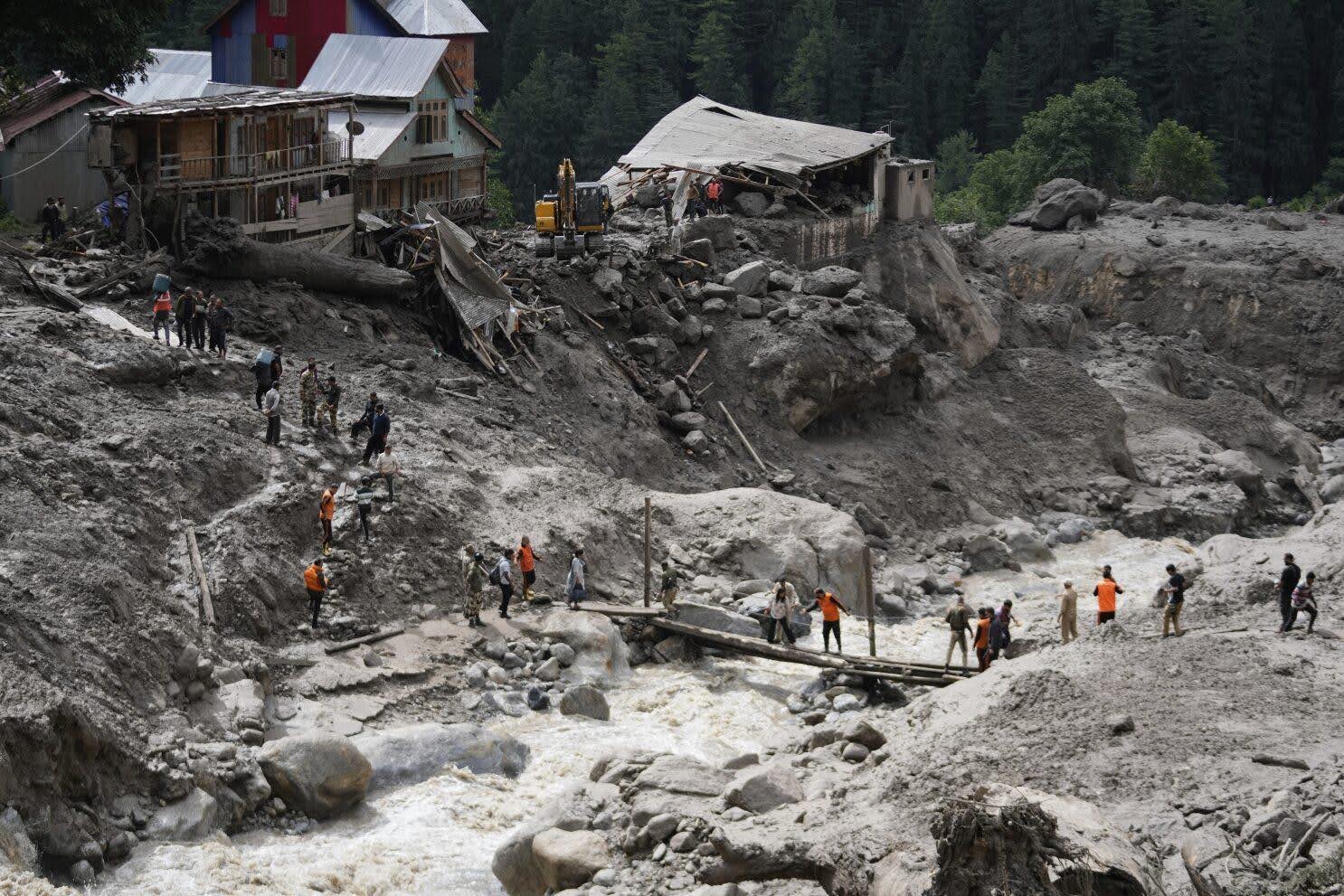
Doda, Reasi and Ramban were among the worst hit. Homes, pipelines and roads were washed away, leaving families without drinking water. In Bhadder (Doda), a landslide buried an entire family. Rajgarh tehsil (Ramban) saw houses flattened after a cloudburst. In Kishtwar’s Warwan Valley, twin cloudbursts destroyed farmlands and left many missing.
In Kishtwar alone, 197 glacial lakes have been identified, many unstable. Scientists warn of an ecological time bomb, but the indian occupying regime continues to put Kashmiri lives at stake.
Economic Collapse
Despite promising to increase connectivity, indian development has not even managed at that. Horticulture, which is the the backbone of the Valley, has been paralysed. Prolonged closures of the Srinagar–Jammu Highway left hundreds of trucks stranded across Kashmir, with apples and pears rotting en route.
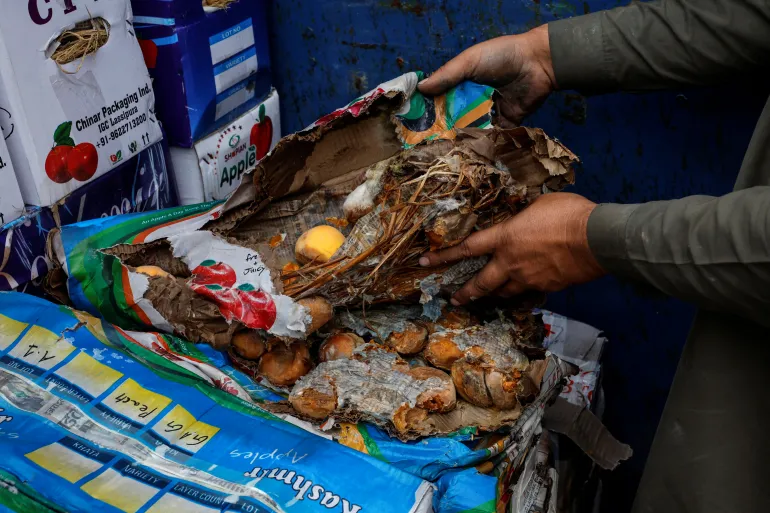
Losses hit Sopore Fruit Mandi, Asia’s second-largest fruit market, forcing it to shut after losses crossed $25 million, with traders warning of $50 million more. Kashmir’s apple industry also suffered when apple prices collapsed, devastating growers in Shopian, Pulwama, Baramulla and Kupwara.
The crisis spread beyond farming. Landslides near Bali Nallah (Udhampur) cut supply routes, while floods displaced 12,000+ people across Budgam, Reasi and the Jhelum basin. In Budgam, a breached embankment alone forced 10,000 residents from their homes.
Food, medicine, fuel and baby formula ran short. Train cancellations stranded passengers across Jammu division, and prolonged power cuts disrupted life in Arnas (Reasi), triggering protests for relief.
The abrogation of Article 370 in August 2019 – which revoked the region’s semi-autonomous status – paved the way for the recent surge in land grabbing by the indian state. Following the abrogation, india has passed laws that violate the human rights of indigenous Kashmiris. One such measure was the Jammu and Kashmir Reorganization Act in 2019, which repealed more than 200 laws that had previously safeguarded the land and residency rights of indigenous Kashmiris.
Decades of land reforms granting Kashmiris legal ownership were nullified after the removal of Kashmir’s special status.
Since 2019, large-scale roads, hydropower projects and tourism-driven development have been promoted as “progress.” Instead, forests are vanishing, riverbanks are encroached upon, and glaciers are destabilised by blasting and tunnelling. Kashmir is shrinking before indian greed and colonial desires, and it is being made inhabitable for its indigenous population.
Stay in touch with Stand with Kashmir.
Stand With Kashmir (SWK) is a Kashmiri-driven independent, transnational, grassroots movement committed to standing in solidarity with the people of indian-occupied Kashmir in ending the indian occupation of their homeland and supporting the right to self-determination of the pre-partition state of Jammu and Kashmir. We want to hear from you. If you have general inquiries, suggestions, or concerns, please email us at info@standwithkashmir.org.
Leave a Reply